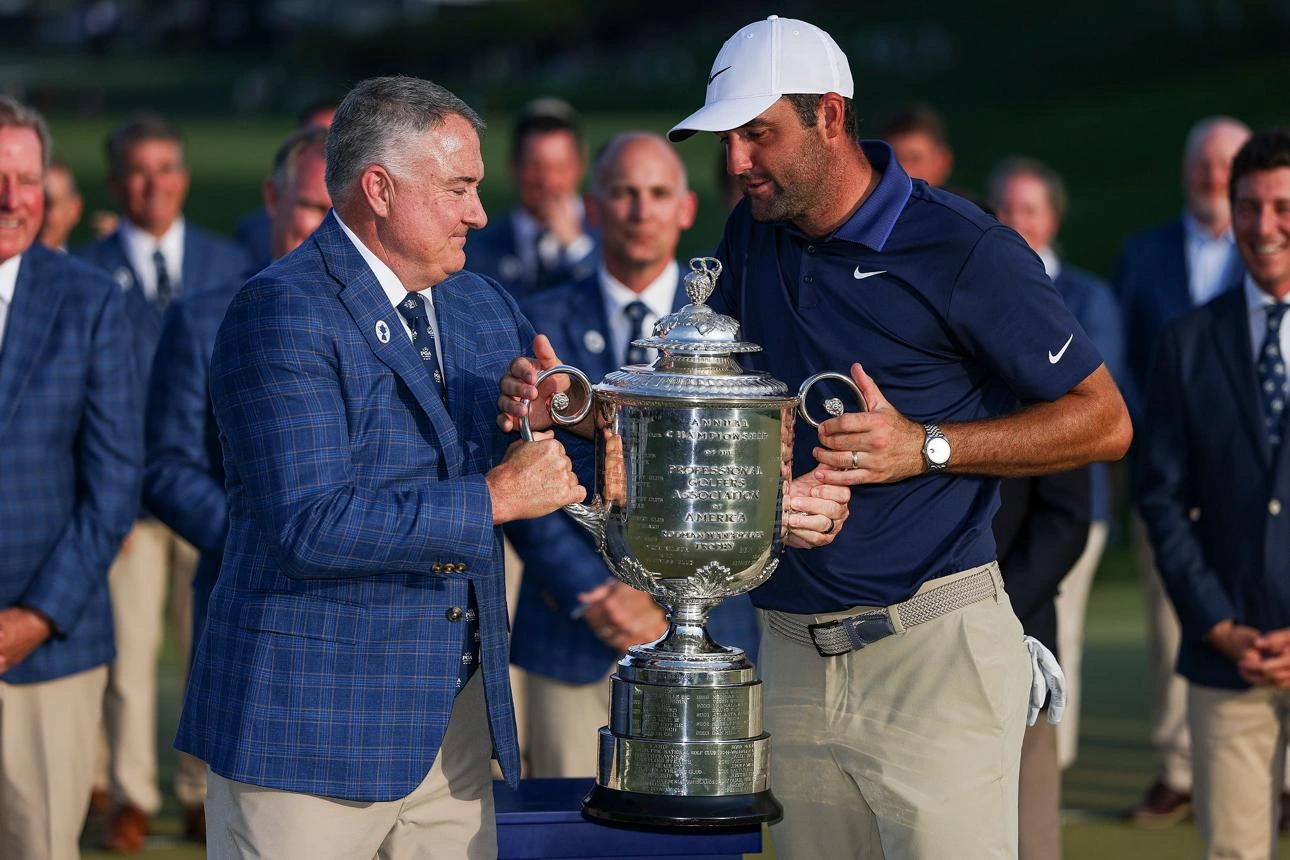
2026 PGA Championship Purse Hits a Record $20.5 Million at Aronimink
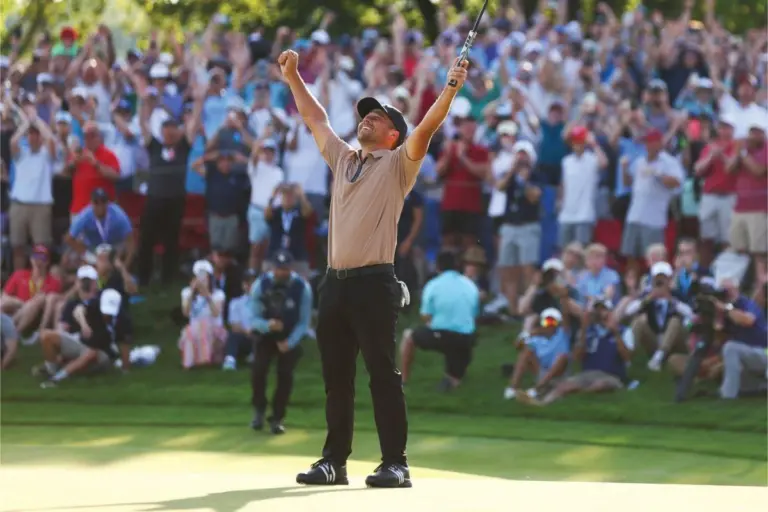
The PGA Championship purse climbed again in 2026, setting a new event record at $20.5 million across the 156 players who teed it up at Aronimink. Aaron Rai walked off with $3.69 million as the winner, a $270,000 bump over what Scottie Scheffler received as 2025 champion. The numbers keep moving up, but the broader picture — where this purse sits against the other majors and against the richest weeks on the PGA Tour — is starting to look more interesting than the headline figure.
For context, the Players Championship still holds the biggest payday in golf at $25 million, and within the four majors, the PGA Championship now sits third behind the U.S. Open and the Masters, both at $21.5 million. The 2026 number is the biggest in PGA Championship history, but the gap above is widening.
The Top of the 2026 Payout Sheet
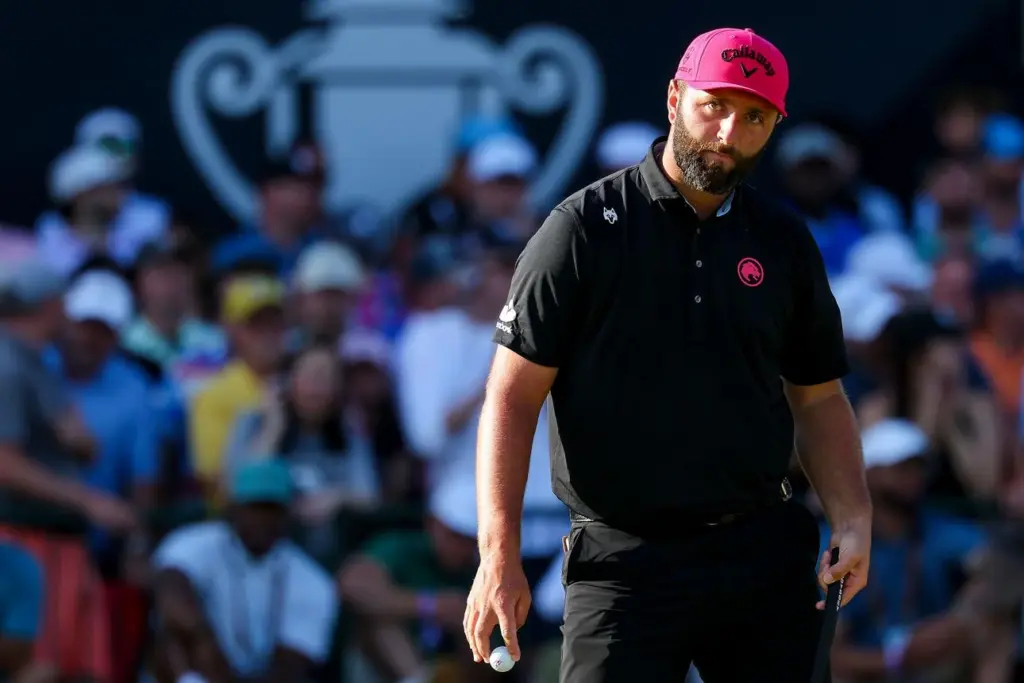
Aronimink paid out big checks deep into the leaderboard, but the drop from first to second is steep — as it always is at majors. Aaron Rai’s $3.69 million is more than $1.4 million ahead of runner-up Jon Rahm, who earned $2.214 million.
| Finish | Player | Earnings |
| 1 | Aaron Rai | $3,690,000 |
| 2 | Jon Rahm | $2,214,000 |
| T-3 | Justin Thomas | $981,400 |
| T-3 | Ludvig Åberg | $981,400 |
| T-3 | Alex Smalley | $981,400 |
| T-3 | Matti Schmid | $981,400 |
| T-7 | Cameron Smith | $637,050 |
| T-7 | Rory McIlroy | $637,050 |
| T-7 | Xander Schauffele | $637,050 |
| T-10 | Kurt Kitayama | $496,708 |
| T-10 | Chris Gotterup | $496,708 |
| T-10 | Justin Rose | $496,708 |
| T-10 | Patrick Reed | $496,708 |
The T-3 group is unusual — four players sharing a near-million-dollar check at a major is the kind of cluster that doesn’t happen often. The T-7 group includes McIlroy and Schauffele, both of whom were in the mix Sunday but couldn’t close the gap on Rai.
The Middle of the Leaderboard
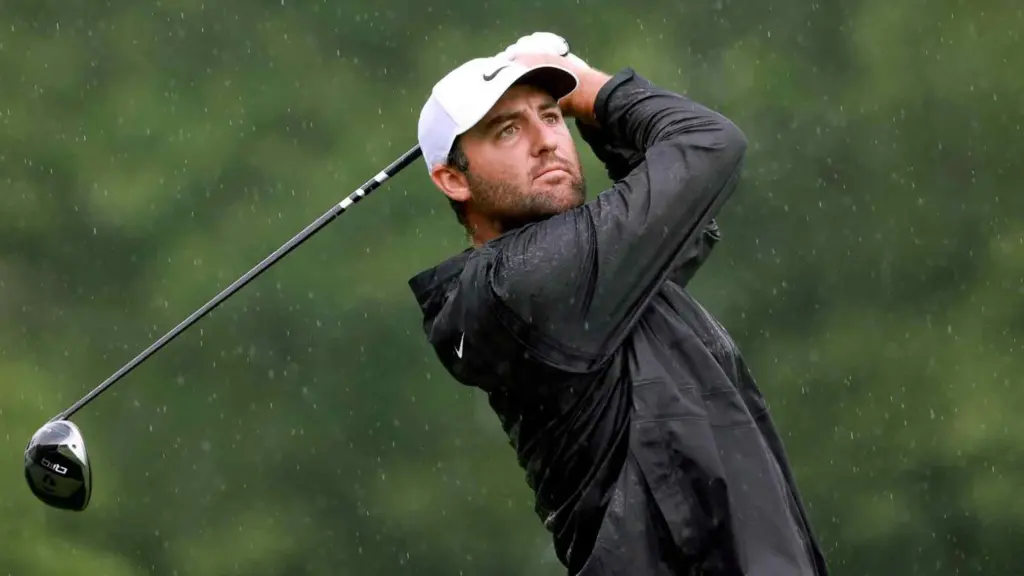
From T-14 down through the late 20s, the checks shrink quickly. Matt Fitzpatrick, Scottie Scheffler, Max Greyserman and Ben Griffin tied at T-14, each earning $364,763. The T-18 cluster — Jordan Spieth, Padraig Harrington, Joaquin Niemann, Min Woo Lee and four others — took home $229,129 apiece.
The T-26 group of nine players, including Hideki Matsuyama, Sam Burns and Cameron Young, earned $125,523 each. By T-35, the check drops to $78,806, with names like Patrick Cantlay, Daniel Berger and Martin Kaymer in that grouping.
The T-44 cluster contains 11 players — Shane Lowry, Dustin Johnson, Chris Kirk among them — each earning $50,348. From there, every cluster down through T-65 still pays five figures: $34,186 at T-55, $29,218 at T-60, $26,900 at T-65. Even the players who finished at the bottom of the made-cut group — Brian Campbell in 82nd at +18 — cleared $23,900. Players who missed the cut received $4,300 each.
How the PGA Championship Purse Got Here
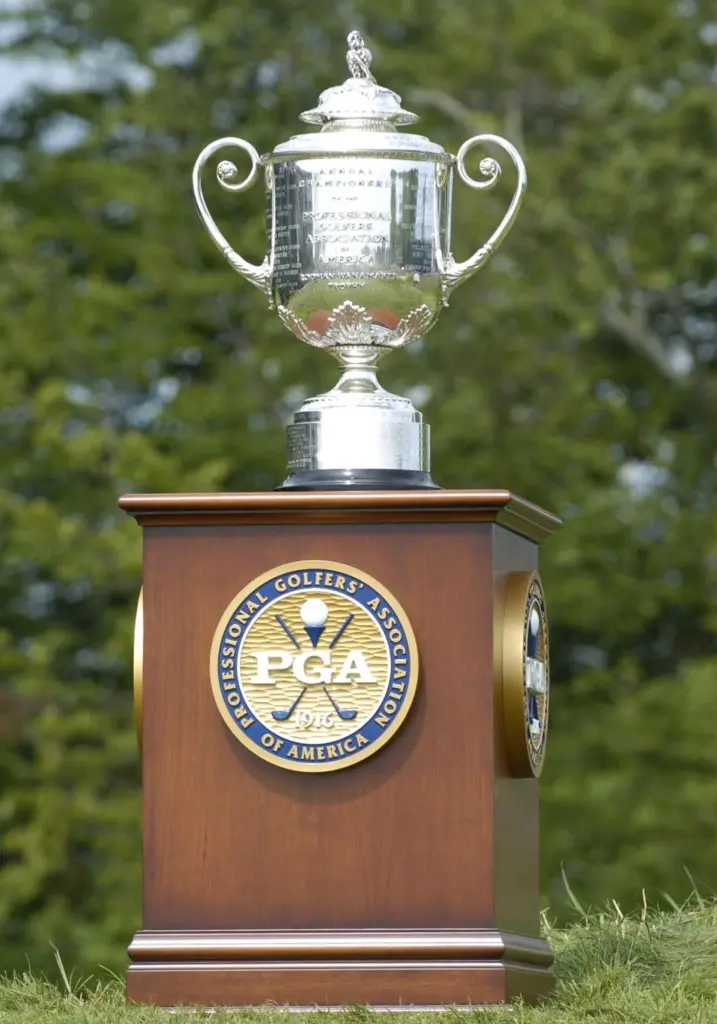
The trajectory of the PGA Championship purse over the last seven years tells the real story. As recently as 2020, the total payout was $11 million. Look at the climb since:
- 2020: $11 million
- 2021: $12 million
- 2022: $15 million
- 2023: $17.5 million
- 2024: $18.5 million
- 2025: $19 million
- 2026: $20.5 million
That’s nearly a doubling in seven editions. The biggest single jump came between 2021 and 2022, when the post-LIV financial pressure on every major hit at once. Every increase since then has been smaller in percentage terms — the 2026 bump of $1.5 million over 2025 is roughly 8%, compared to the 25% leap in 2022.
The reasons behind the slowdown are starting to come into focus. LIV Golf’s funding picture has changed now that the Public Investment Fund won’t be backing it past the end of this year, which removes some of the upward pressure that pushed every major into purse-arms-race mode. Within the broader tour calendar, the $20 million PGA Tour signature events and the $25 million Players Championship still set a ceiling the majors haven’t matched.
Where the PGA Championship Sits Among the Majors
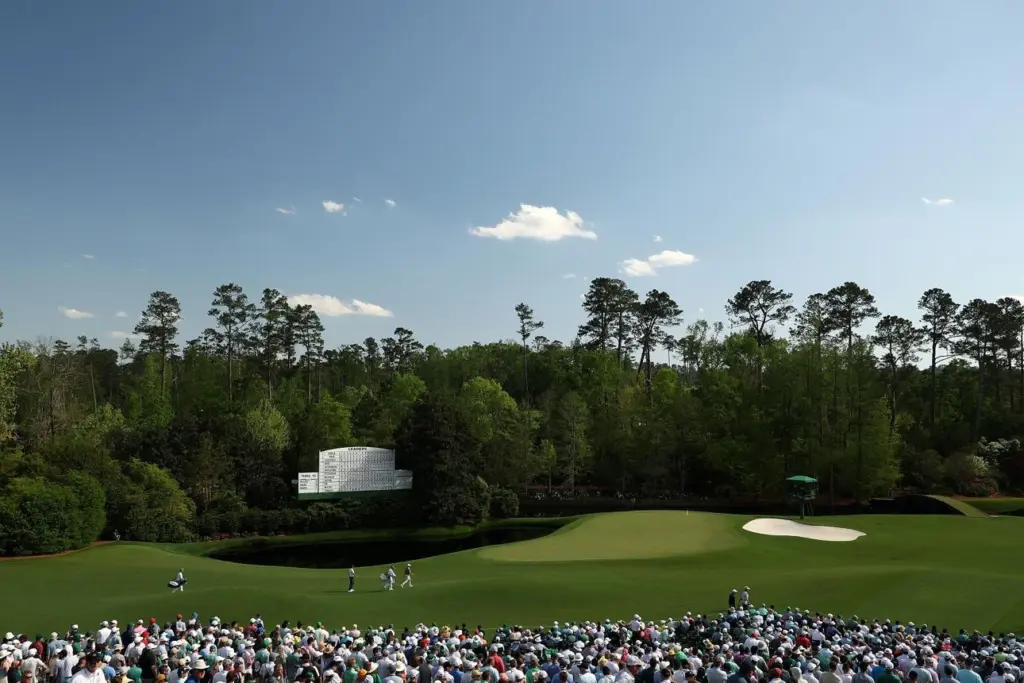
The PGA Championship’s $20.5 million purse is a record for the tournament, but it’s no longer the second-biggest payday in golf. Both the Masters and the U.S. Open paid out $21.5 million in 2026. The Open Championship trails the group at $17 million from last July at Royal Portrush.
A few years ago the PGA Championship was reliably the second-richest major. Now it’s third, and the $1 million gap from the top tier matters less for the players — most of whom are competing for FedEx Cup math and world ranking points anyway — than for the governing bodies running each event. PGA of America CEO Terry Clark, who took the job in January 2026, has publicly described the purse decision as “a balanced approach,” signaling that the era of automatic year-over-year jumps may be ending.
The structural reason behind that caution is straightforward. The PGA of America funds teaching professionals, junior development programs and a year-round operational footprint. Every dollar pushed into purse money is a dollar that doesn’t go into those other commitments. The R&A made similar comments earlier this year about how purse inflation pulls funding away from grassroots work.
The Made-Cut Tail
One quietly significant feature of the 2026 PGA Championship payout is how much money still reaches the bottom of the field. The made-cut tail — players finishing in the 70s and 80s on the leaderboard — earned between $23,900 and $26,900. That’s real money for a player grinding through a tough week.
A few of the tail-end finishers are recognizable names: Jason Day at T-65, Luke Donald at T-70, Brooks Koepka in the T-55 group. The pay structure at majors compresses heavily through the middle of the leaderboard, but the bottom checks are now substantially larger than they were even three years ago. A 2023 missed-cut share was below today’s tail-end check — and at $4,300 in 2026, even missed-cut players walk away with something.
What This Means for 2027

The 2026 PGA Championship purse was a strong week for the players. It was also, very possibly, the last of the easy increases. Clark’s tone heading into the year was measured, the rate of increase is slowing, and the competitive pressure that drove purses up has eased now that LIV’s financial picture is unclear.
What’s worth watching: whether the Masters and U.S. Open hold or push their $21.5 million line, whether The Open closes any of the $3.5 million gap from $17 million, and whether the PGA Championship’s 2027 purse stays flat or follows the modest pattern of recent bumps. For Aaron Rai, none of that matters this week. He walked off Aronimink with $3.69 million, a Wanamaker Trophy, and the biggest single payday of his career.