PGA Championship Payout 2026: Inside the Record $20.5 Million Purse at Aronimink
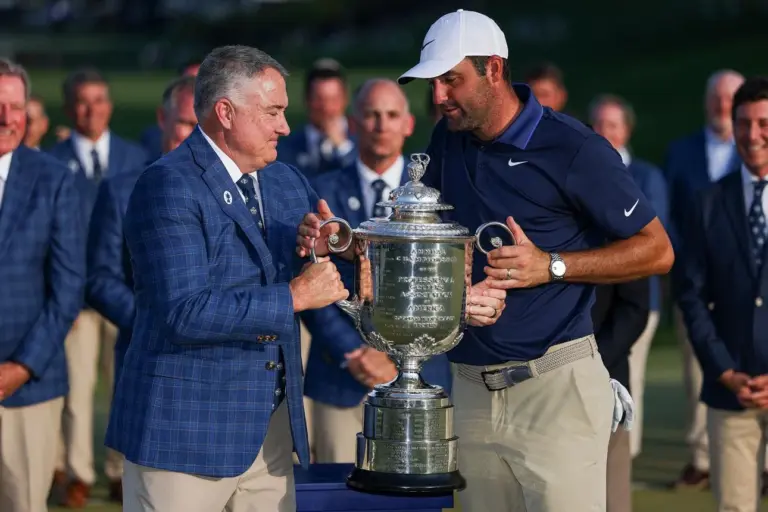
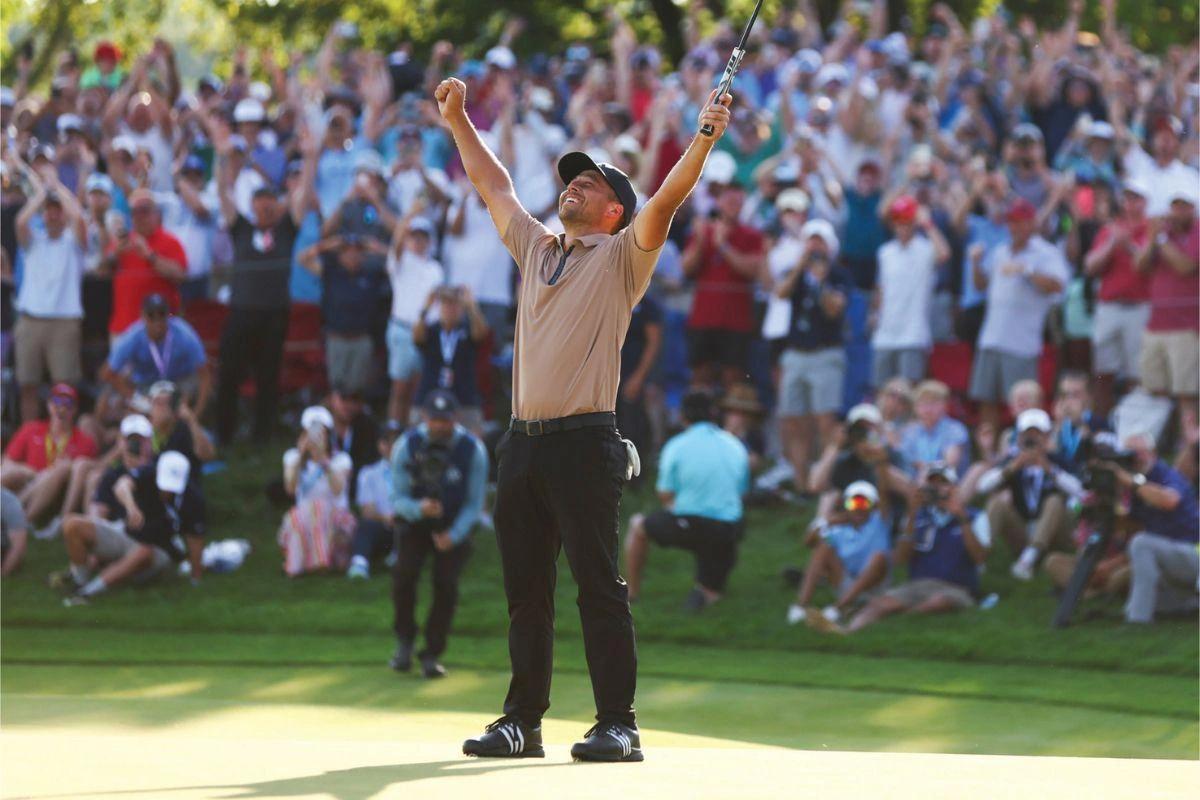
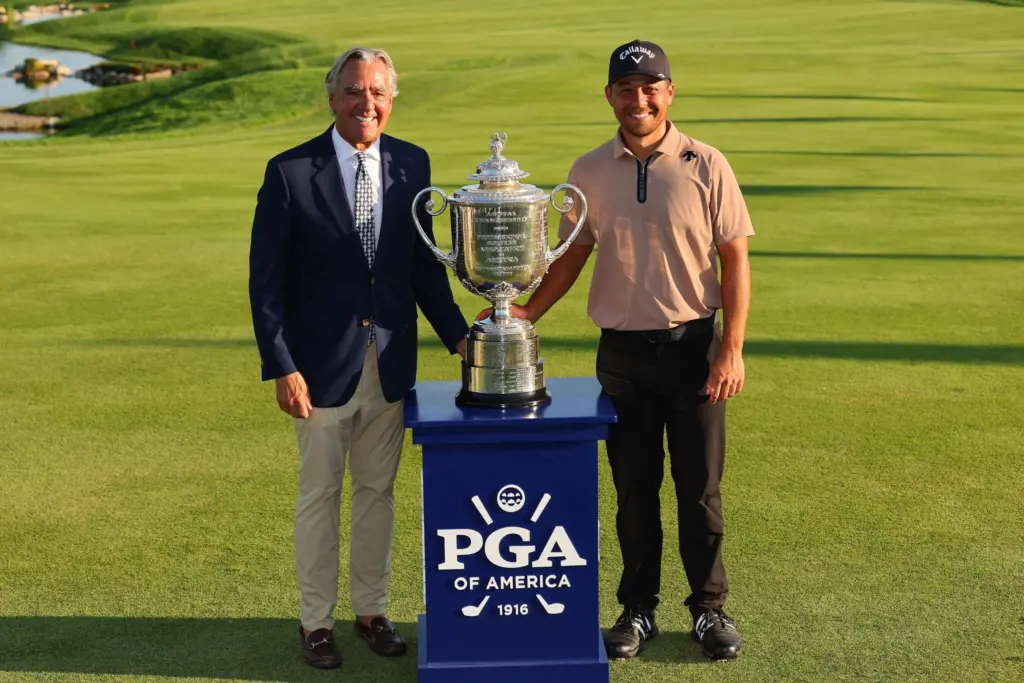
The 2026 PGA Championship at Aronimink Golf Club closed out with the biggest payout in the event’s history — a $20.5 million purse, with Aaron Rai walking off with $3.69 million as the winner. That’s a $1.5 million bump on last year’s total prize money, and another rung on a ladder that’s been climbing almost every season for nearly two decades. But the number itself is only half the story. The more interesting question, the one PGA of America CEO Terry Clark spent part of his Wednesday press conference dancing around, is whether the climb is finally about to stop.
Practical verdict: the 2026 PGA Championship purse is a record, but it’s no longer the biggest major payday — it now sits third behind the U.S. Open and the Masters, both at $21.5 million. For players, the real money lives elsewhere on the tour calendar. For fans tracking purses, the era of automatic year-over-year jumps looks like it’s slowing down.
What the 2026 PGA Championship Payout Looks Like
The headline number is $20.5 million in total prize money, distributed across the entire field that made the cut at Aronimink. The pay drop-off from the winner’s check to second is steep, as it always is at majors, and the gap narrows quickly through the middle of the leaderboard.
The top of the payout sheet for 2026:
| Finish | Player | Score | Earnings |
| 1 | Aaron Rai | — | $3,690,000 |
| T-2 | Jon Rahm | -6 (274) | $1,804,000 |
| T-2 | Alex Smalley | -6 (274) | $1,804,000 |
| T-4 | Justin Thomas | -5 (275) | $843,867 |
| T-4 | Ludvig Aberg | -5 (275) | $843,867 |
| T-4 | Matti Schmid | -5 (275) | $843,867 |
| T-7 | Cameron Smith | -4 (276) | $637,050 |
| T-7 | Rory McIlroy | -4 (276) | $637,050 |
| T-7 | Xander Schauffele | -4 (276) | $637,050 |
From there the curve flattens fast. Finishers in the T-10 group — Kurt Kitayama, Chris Gotterup, Justin Rose and Patrick Reed — picked up $496,708 each. The T-14 cluster, including Scottie Scheffler and Matt Fitzpatrick, took home $364,763. By the time the leaderboard reaches T-18, the check sits at $229,129, and at T-26 the number drops to $125,523.
The made-cut tail of the field still earned real money. Players in the T-35 group received $78,806. The T-44 cluster — including Shane Lowry, Dustin Johnson and Chris Kirk — got $50,348 each. The bottom of the paying field, players who survived the cut but finished in the 70s and 80s on the leaderboard, earned between roughly $23,900 and $26,900. Brian Campbell, finishing 82nd at +18, still cleared $23,900.
Where the PGA Championship Sits Among the Majors
The PGA Championship’s $20.5 million purse is a record for the tournament, but the broader major-championship pecking order has shifted. The U.S. Open and the Masters both paid out $21.5 million in 2026, with the Masters number settled last month. The Open Championship at Royal Portrush last July came in at $17 million — still the lightest of the four majors by total purse, though the prestige math doesn’t run on dollars alone.
The position matters more than it used to. A few years ago the PGA Championship was reliably the second-biggest payday in golf. Now it’s third, and the gap between the U.S. Open / Masters tier and the PGA / Open tier is widening. For players chasing FedEx Cup math or world ranking points, the difference is marginal. For the governing bodies themselves, the gap is becoming part of the storyline around how each major is funded.
The PGA of America’s Cautious Tone
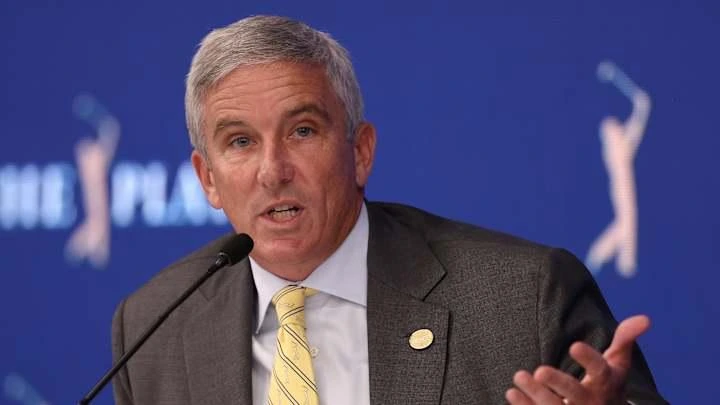
Terry Clark, who took the PGA of America CEO job in January 2026, sat in front of media on Wednesday at Aronimink and got the question every major championship boss gets now: how much longer can purses keep going up? His answer was measured.
Clark talked about a “balanced approach” and said the organization looks at the PGA Championship purse “every year” as part of how it improves its core assets. He also pushed back gently on the idea that the PGA Championship sets its number by watching the other majors or the PGA Tour’s signature events. “It’s not always in comparison to all of those,” Clark said. “It’s what are the factors that make sense.”
That answer carries weight in 2026 specifically. LIV Golf’s funding picture has shifted now that the Public Investment Fund won’t be backing it past this year, and the competitive pressure that pushed the PGA Tour into $20 million signature events and a $25 million Players Championship payday has softened. The arms race that drove every purse up isn’t fully over, but its loudest engine is sputtering.
How the PGA Championship Purse Got Here
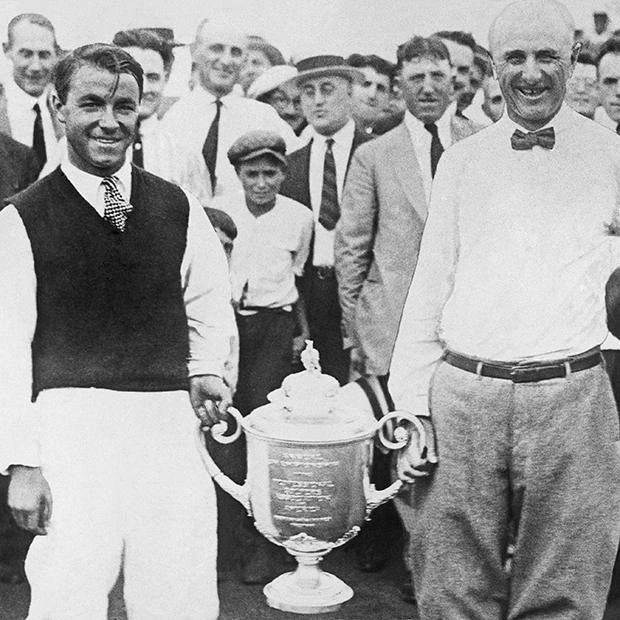
The trajectory is the part that’s worth pausing on. The PGA Championship has been around since 1916, when the first winner picked up $500 from a total purse of $2,580. The growth was slow and stepwise for decades. In 1931, the winner’s pay reached $1,000. In 1953, it hit $5,000. In 1965, the purse crossed into six figures at $149,700.
The modern era moved faster. The 1988 PGA Championship was the first to crack a $1 million total purse. By 2000, the total was $5 million. In 2003, the winner’s share crossed $1 million for the first time, at $1.08 million. The numbers from 2014 onward look like this:
- 2014: $9.91 million total, $1.8 million winner
- 2018: $11 million total, $1.98 million winner
- 2021: $12 million total, $2.16 million winner
- 2022: $15 million total, $2.7 million winner
- 2023: $17 million total, $3.15 million winner
- 2024: $18 million total, $3.3 million winner
- 2025: $19 million total, $3.42 million winner
- 2026: $20.5 million total, $3.69 million winner
The 2022 jump is the obvious inflection point. That’s the year the post-LIV financial logic kicked in. The annual increases since then have been steady but progressively smaller in percentage terms — from a 25 percent jump in 2022 to roughly 8 percent in 2026.
The Sustainability Question

R&A chief Mark Darbon recently pointed out the zero-sum side of all this: every dollar pushed into purse money is a dollar that doesn’t go into the governing bodies’ grassroots programs, course access work, and amateur game development. The four majors aren’t tournaments in the same sense as a regular tour event — they’re vehicles for organizations whose work runs year-round and far beyond the four days of competition.
That’s the tension Clark was managing on Wednesday without saying it directly. Keeping the PGA Championship competitive on purse matters for player attraction and broadcast optics. But the PGA of America funds teaching professionals, junior development and a large operational footprint, and a runaway purse eats into that math.
What This Means for the Rest of 2026
For the players, the 2026 PGA Championship payout was a strong week for anyone in the top 50 and a meaningful one even for those at the bottom of the made-cut list. For PGA of America, the slowing rate of increase is a signal that the major championship purse race may finally be entering a steadier phase rather than an exponential one. If LIV’s funding picture stays uncertain, expect the 2027 PGA Championship purse to be discussed in even more cautious terms.
What’s worth watching next: whether the U.S. Open and Masters hold their $21.5 million line or push higher, whether The Open closes any of the gap from $17 million, and whether Clark’s “balanced approach” turns into a flat year or another modest bump when Aronimink hands off the championship.